
The global official gold holdings totaled 31,694.8 tonnes as of April 2013.
The demand for the precious metal stood at 202.1 tonnes in the same quarter last year.
Global appetite for gold fell 21 per cent in the third quarter as outflows from physical bullion funds and the drop in buying from India offset firmer jewellery, coin and bar sales, a quarterly report from the WGC showed on Thursday.

Gold is an excellent asset class for diversification and should be included in all long-term portfolios.
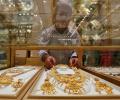
This was because of the closure of retail shops and factories after the nationwide lockdown was imposed to prevent spread of Covid-19, and a sharp increase in the metal's price.

The total sales volumes of gold for 2012 stood at Rs 2.47 lakh crore (Rs 2.47 trillion) and total quantity of gold sold in the country was 864 tonnes, Vipin Sharma, Director (Jewellery) WGC told reporters in Kochi.
In the first quarter of 2013, gold imports declined 5.7 per cent, as traders relied mostly in stocks to meet rising demand.

China was the only gold jewellery market to grow 6 per cent in 2009, according to the figures compiled by the organisation formed and funded by worlds leading gold mining companies.
India (NRIs included) goes crazy about gold jewellery.
Stung by the steep fall in demand for the yellow metal in the world's largest consumer nation, the World Gold Council is now falling back on the familiar marketing mantra: If customers aren't coming, go to their doorsteps. The reason for the marketing overdrive by the Indian arm of the WGC is simple: India, which used to import around 60 tonnes of gold a month till last year, has seen zero imports in the past two months because of the prevailing high prices.
According to news article posted on the World Gold Council web site, gold nanoparticles ten thousand times smaller than a human hair could be used to break down chemicals in drinking water and reduce pollution. It said the particles, which mix gold and palladium, are the creation of engineer Michael Wong from Rice University in Houston, Texas.

The Wrestling Federation of India unveiled a new selection policy that makes attendance at national camps mandatory to be eligible for national selection, bars wrestlers from training independently and mandates Olympic Games quota-winning athletes to appear in a final one-bout selection trial.

The council is looking at the youth as a segment in the global market and has started the LoveGold on the social media (Facebook and Twitter).

India, China account for 54% of total gold demand in first four mnths of 2015.
The high import duty on gold, local taxes and restrictions on imports are leading to a rise in smuggling of the commodity into the country.
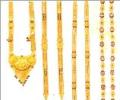
India is crazy about gold jewellery. With the World Gold Council aggressively marketing social and religious functions as gold buying events, the demand has shot up in the recent years to record levels.
Up 37% in December quarter, nearly 70 per cent over the year, a fourth of entire global intake.
Slump after 5 quarters amid high prices, rupee depreciation.

In the July-September period of this year, the domestic demand improved mainly due to Diwali demand and the upcoming marriage season.

The most compelling reason for putting money in gold is its role as a long-term or strategic asset.

'Neither SAI nor state departments have a dedicated sports administration service. Instead, roles are filled by generalist civil servants or contractual staff, often lacking sector-specific expertise.'

This year, WGC expects India's gold demand to stand at 865-965 tonnes. Last year, it was 864.2 tonnes.
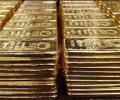
India's total demand for gold rose by 94 per cent to 365-tonnes in H1 2010 as compared to 188.4-tonnes in H1 2009, the World Gold Council said in a statement here.
According to data compiled by London-based Gold Field Minerals Services (GFMS) for the World Gold Council (WGC), the combination of a robust economy and buoyant stock market helped fuel purchases of the metal during the first eight to nine months of the year, despite gold breaching the psychologically significant level of Rs 9,000 per 10 grams in September.
WGC will conduct nearly 30 workshops across the Indian cities as a prelude to Au DITIONS, a competition for gold jewellery designers. Au DITION is aimed at identifying three trend-setting designers, whose works will be showcased worldwide.
Some of the leading, most cutting-edge, designs in India take inspiration from Indian culture and history.

Sky-high gold jwellery prices will haunt buyers in 2010 also though India is better placed than its global peers, where people are slowly turning back to purchases, according to World Gold Council.

Gold prices in the national capital touched a peak of Rs 16,250 per 10 grams before Diwali, on October 14, from Rs 15,370 in the beginning of September. The prices are ruling at Rs 16,175 per 10 grams on Friday.
Gold demand in the country was 864 tonnes during 2012, according to data given in WGC 'Gold Demand Trends 2013' report.
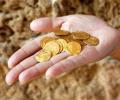
Sales of gold coins and bars should be curbed after reaching around 300 tonnes

According to the Q2 09 Gold Demand Trends report released on Wednesday by WGC, 'investment demand for gold remained very strong in the second quarter of 2009, rising 46 per cent on year-earlier levels as investors continued a flight to quality'.
Investors globally have found solace in gold in the last one year when major world economies slipped into recession. Sample this: According to World Gold Council data, investment by exchange traded funds in gold was 150 tonnes in the third quarter

'I have no idea about such a medal. Never got one,' says Surya Shekhar Ganguly, the national chess champion between 2003 and 2008.
India's first quarter gold demand decreased by 29 per cent in volume at 207.6 tonne, year-on-year, while it dipped by 3 per cent at Rs 56,650 crore (Rs 566.5 billion) in terms of value.
India owns over 18,000 tonnes of above ground gold stocks worth approximately $800 billion and representing at least 11 per cent of global stock, according to estimates of World Gold Council.
Indian buyers were on a gold buying spree during the July-September 2004 period despite the rising prices of the precious metal, said a World Gold Council report on Tuesday.

In Q1 2010, India was the strongest performing market as total consumer demand surged by 698 per cent to 193.5 tonnes.

Gold only beats inflation. It fares poorly when compared to real estate or shares when compared on the basis of real inflation adjusted returns. Any serious investor, however, is advised to have a certain percentage of investment in gold to hedge inflation.
